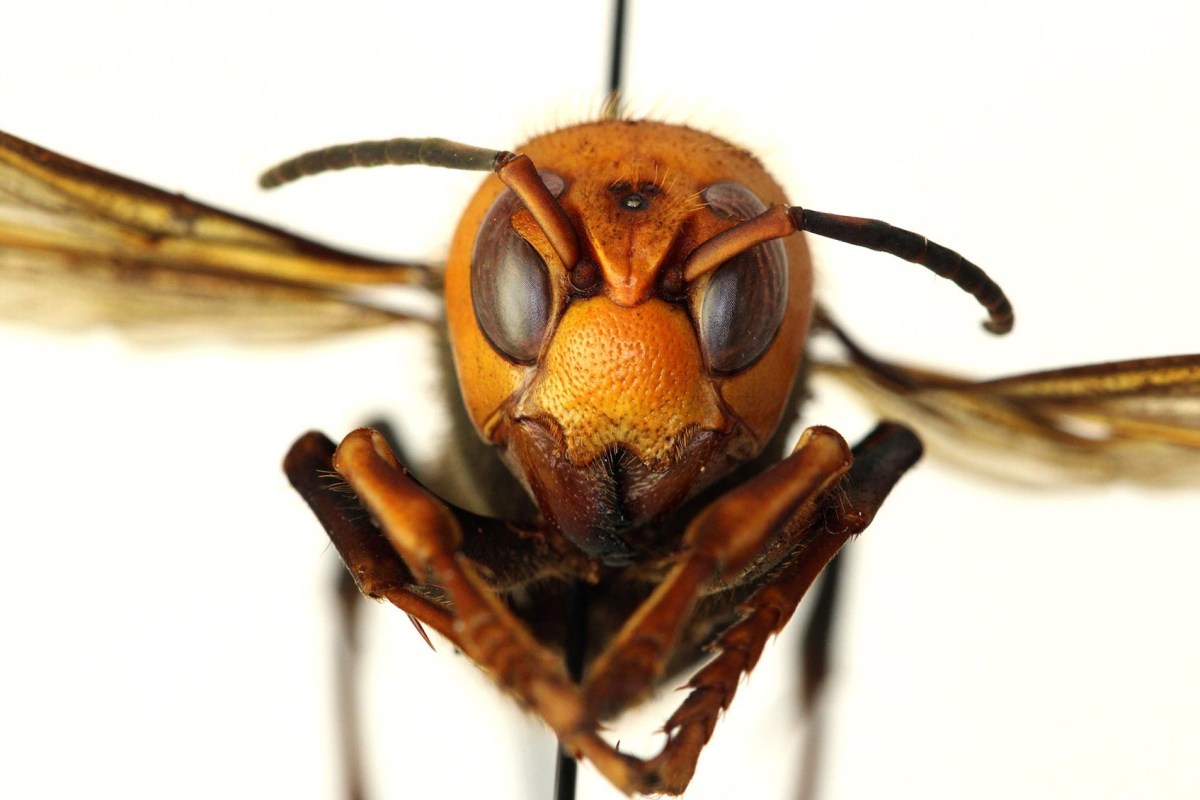
Those “murder hornets” made the news again last month when entomologists from Washington State Department of Agriculture captured a nest of the invading Asian giant hornet (Vespa mandarinia). The nest was in a tree near Blaine, Washington not far from the Canadian border.
The giant hornet has a nasty and potentially lethal sting. But more importantly, it’s a significant predator of honeybees. The giant Asian hornet can grow up to 2.5 inches long, easily killing adult bees and feeding on bee larvae. Hornets can destroy an entire hive in three hours, and their stings penetrate typical bee suits.
The WSDA has been actively searching for the world’s largest hornet since the first such insect was discovered in the area last December. They trained crews of crew of entomologists, Master Gardeners, beekeepers and other volunteers to be on the lookout for this dangerous insect throughout the spring and summer.
One such nest was identified in early October. Scientists trapped several large insects, and using dental floss to attach tiny radio trackers, followed them back to their nests. After several failed attempts, they were led to a dead tree in an area that was being cleared for new construction.
Wearing special suits to protect them from the insects’extra-long stingers, the team used a vacuum to remove 85 hornets and caught 13 others with a net. After the elimination, the team returned to cut into the portion of the tree that had the nest. They found two queens and other worker hornets, larvae and capped brood.
Here is a bit more information from a Washington State University news release, which is working with the WSDA on this project:
The Asian giant hornet’s life cycle begins in April, when queens emerge from hibernation, feed on plant sap and fruit, and look for an underground dens to build their nests. Once established, colonies grow and send out workers to find food and prey.
Hornets are most destructive in the late summer and early fall, when they are on the hunt for sources of protein to raise next year’s queens.
“Don’t try to take them out yourself if you see them,” warns WSDA entomologist Chris Looney. “If you get into them, run away, then call us! It is really important for us to know of every sighting, if we’re going to have any hope of eradication.”
Thank goodness we do not need to worry about these hornets yet in Iowa! I might give up beekeeping.
News release about the capture:
 Bee Lady Honey