
I’m always looking out for our bees, especially as we head into fall. The key to surviving the cold winter temperatures of Iowa is to go into that season with as many healthy bees as possible.
But that could be a huge task given that we’re now in what’s known throughout beek-world as “dearth.” Sounds ominous, almost Darth Vader-like. Well, it is for honeybees!
Right now there’s a dearth of nectar and pollen, a situation we’ve had in Iowa since about the middle of August.
Not a whole of is blooming right now. My garden is on its last gasp – only the Autumn Joy sedum has blooms and the bees flock to it. Even the prairies, where all sorts of forbs show off all summer, are starting to turn various shades of brown.
Our bees are trying to build up their honey stores for winter, too, after we harvested the honey supers from the top of their colonies last month. But it’s slim pickings out there. We’ve been diligent in feeding them sugar water, which the bees will use for energy while they finish up the last of their honey-making from the flower nectar they’ve brought into the hive.
You can help honeybees, too, by selecting plants for your landscape that naturally bloom later in the season.
I wasn’t aware of such a list until I heard a great presentation by Natalia Bjorklund, an extension horticulture specialist for the University of Nebraska-Lincoln. She’s also an entomologist and has studied wild bees as well as honeybees. She has compiled a list of fall-blooming plants that provide important food supplies for honeybees.
A good example are asters. Asters, both the hybrids and natives you find in the Midwest, provide more nectar and pollen than other popular fall-bloomers, such as chrysanthemums. I love those full pots of orange gold and purple mums, and come to think of it, I don’t see a lot of bees hanging around them. A better choice would be asters.
Two annuals on her bee-love list are buckwheat (Fagopyrum esculentum) and borage (Borago officinalis). Buckwheat blooms only 35-42 days after planting and blooms can last up to six weeks. Borage also has a long bloom time and will reseed itself. Both have lots of small white flowers.
Below is Bjorklund’s list of perennials that are an important food source for bees during late summer and early fall (August and September) in our region.
Fall-blooming perennials
- Russian sage (Perovskia atriplicfolia): known for its beautiful blue flowers, this plant can tolerate drought
- Bluebeard or blue mist (Caryopteris x clandonensis): similar to Russian sage, also drought-tolerant
- Sweet autumn clematis (Clematis ternifolia): sweet-smelling white blooms on a trailing vine, will grow in part shade
- BeeBee tree (Tetradium daniellii): small tree (25-30 ft tall) with smooth gray bark produces great nectar in July but it can be invasive in some areas
- Seven Son flower (Heptacodium miconioides): similar to the BeeBee tree but it is not invasive
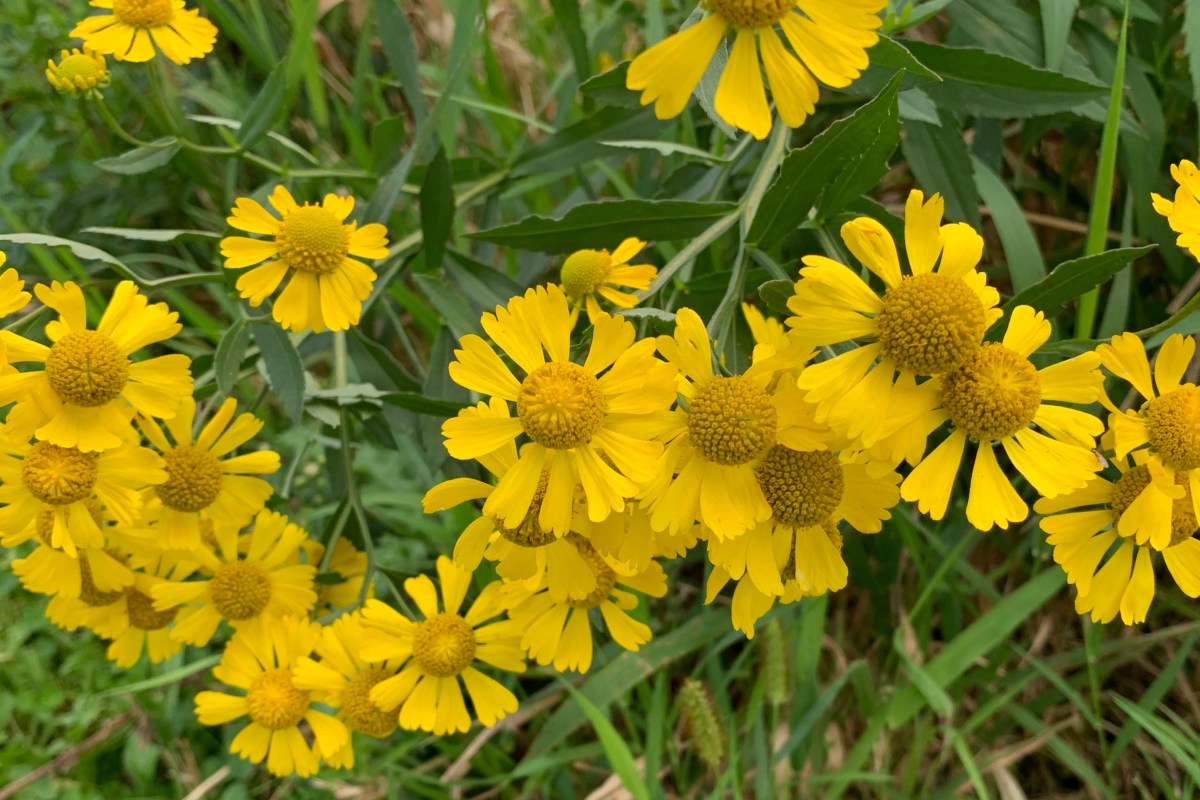
- Sneeze weed or Helen’s flower (Helenium autumnale): requires full sun and moist-to-average soils with red, orange or yellow blooms
- Sedum, also called stonecrop: requires full sun and average-to-dry soils, flowers can be pink, white or purple
- Sunflowers (various species of Helianthus): many species available, some are native and perennial, tall
- Goldenrod (various species of Solidago): numerous species native to North America, gold flowers, excellent source of pollen and nectar, also habitat
- Asters (Symphyotrichum): native to our region, blooms until frost, full sun and tolerates range of soils
- Blue sage (Salvia azurea v. grandiflora): blue flowers, likes full sun
- Japanese anemone (Anemone x hybrida): pink or white flowers, grows in part shade
Many thanks to Natalia for this helpful information and to the Nebraska Beekeepers Association and UNL Bee Lab for inviting Iowa beekeepers to this program!
 Bee Lady Honey