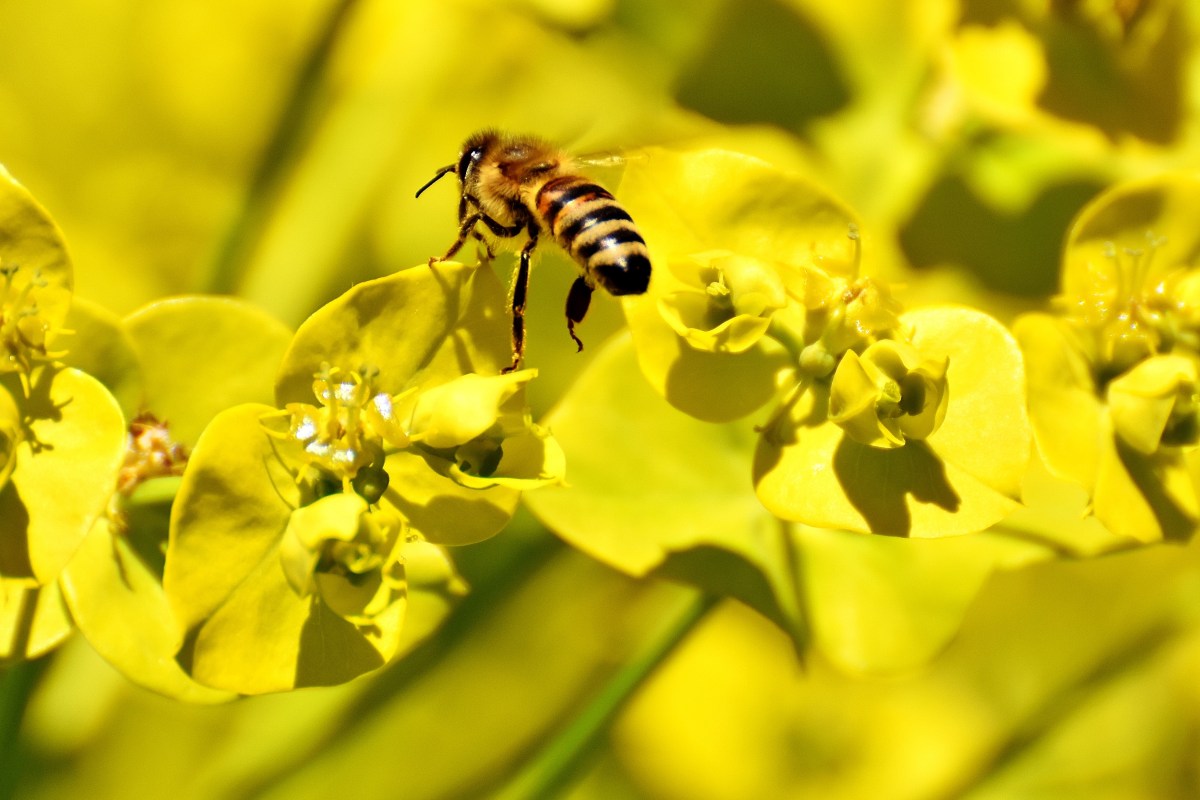
What does a tiny European country, a Nigerian diplomat and a hive of healthy honeybees have in common? All are part of World Bee Day on May 20.
Wednesday is an international observance proclaimed by the United Nations in 2017 to acknowledge the role of the honeybee in food security and biodiversity. Thanks to a Slovenian beekeeper (and national hero, I might add), honeybees have their day in the sun worldwide. Peter Kozmus successfully petitioned the United Nations in 2017 to set up this special observance.
The date chosen for World Bee Day is the birthday of Anton Jansa, considered the pioneer of modern beekeeping. Jansa was born in 1734 and was the first teacher in a beekeeping school established by the empress of the Habsburg Empire in a region that is now Slovenia.
It is appropriate that World Bee Day has its roots in Slovenia, where beekeeping is a national pastime. One in every 200 people in this country of 2 million keep bees. Honey is an important ingredient in Slovenian cooking and all sorts of bee products are widely used throughout the country. In fact, during the coronavirus, beekeepers were deemed essential workers in Slovenia.
We all know the importance of bees. From the United Nations World Bee Day website:
“Pollination is a fundamental process for the survival of our ecosystems. Nearly 90 percent of the world’s wild flowering plant species depend, entirely or at least in part, on animal pollination, along with more than 75 percent of the world’s food crops and 35 percent of global agricultural land. Not only do pollinators contribute directly to food security, but they are key to conserving biodiversity.”
These two phrases on the website really struck home: pollinators are “pillars of our ecosystems” and honeybees are “ambassadors of pollinators.”
Nigerian diplomat Tijjani Muhammad-Bande is president of the UN General Assembly. Here is how he describes the situation and challenges:
“Although diminutive, bees underpin our food systems: close to three-quarters of the world’s crops depend, at least in part, on bees and other pollinators. In economic terms, natural pollinators contribute up to $577 billion to the global economy.”
“However, colonies have been collapsing due to disturbances in their habitats as a result of intensive agricultural practices, changes in land use, urbanization, and the use of pesticides which are harmful to pollinators. Furthermore, bees face the threat of climate change-induced extreme weather events.”
I especially liked the “action” steps outlined on the United Nations World Bee Day website, How Can We Do More?
Individually by:
- planting a diverse set of native plants, which flower at different times of the year;
- buying raw honey from local farmers;
- buying products from sustainable agricultural practices;
- avoiding pesticides, fungicides or herbicides in our gardens;
- protecting wild bee colonies when possible;
- sponsoring a hive;
- making a bee water fountain by leaving a water bowl outside;
- helping sustaining forest ecosystems;
- raising awareness around us by sharing this information within our communities and networks; The decline of bees affects us all!
As beekeepers, or farmers by:
- reducing, or changing the usage of pesticides;
- diversifying crops as much as possible, and/or planting attractive crops around the field;
- creating hedgerows.
As governments and decision-makers by:
- strengthening the participation of local communities in decision-making, in particular that of indigenous people, who know and respect ecosystems and biodiversity;
- enforcing strategic measures, including monetary incentives to help change;
- increasing collaboration between national and international organizations, organizations and academic and research networks to monitor and evaluate pollination services.
I hope you are moved to celebrate with me on World Bee Day!
A great story in TIME magazine, The Bee Whisperers of Slovenia Have a Plan to Save Colonies from Climate Change
Official UN website for World Bee Day (with lots of resources)
 Bee Lady Honey