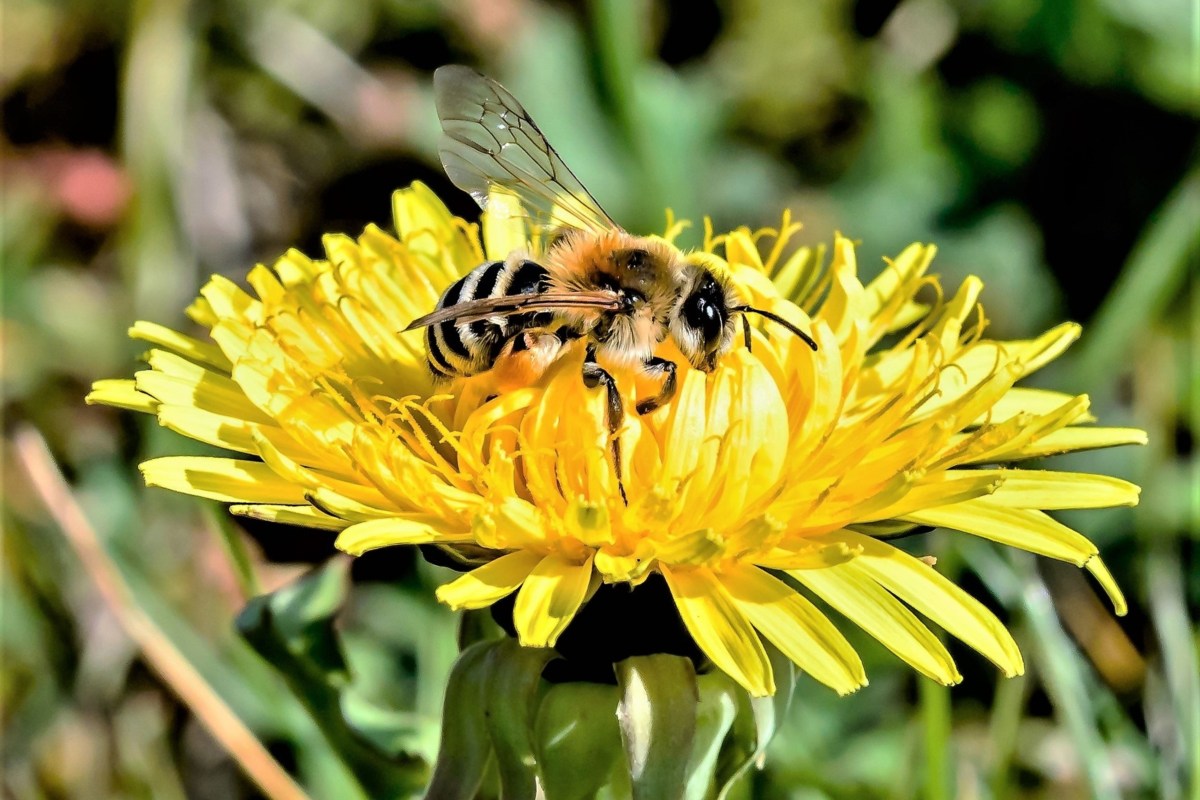
Not too long ago, in an inconspicuous report, bees were awarded a huge honor — named the most important living beings on Earth.
That designation was the conclusion of an annual debate sponsored by the Earthwatch Institute and the Royal Geographical Society of London. The events, designed to create awareness, feature prominent scientists making the case each year for the most endangered ecosystem, invasive species or essential animal to make a point about some environmental challenge.
This year the award went to bees (as it did in 2008) but for many more reasons, the most frightening being the fact that bees themselves may be joining the long list of endangered species.
Bees around the world have disappeared up to 90 percent, according to recent studies. The reasons are different depending on the region, but among the main reasons are massive deforestation, lack of safe places for nests, lack of flowers, use of pesticides, changes in soil, among others.
The other reasons for bees to get this honor are many, as listed in Scientific American’s report from the debate:
- Seventy percent of the world’s agriculture depends exclusively on bees.
- Needless to mention the pollination is the bees’ job, although the plants would not be able to reproduce, therefore the fauna would have been gone in a very short time.
- More than that, another recent study concluded that bees are the only living being who does not carry any type of pathogen.
But I can think of many more reasons! Honeybees are the only insect that produces food that can be consumed by humans. And the quality of that food — honey as well as propolis — has amazing antibacterial, anti-inflammatory and anti-oxidant qualities.
All the other aspects of bees — their social behavior, how they communicate and how they have adapted over thousands of years make honey bees one of the coolest beings on Earth.
 Bee Lady Honey