The big reveal

The day is finally here: time to harvest the season’s honey!

My gals have been busy as – well, bees! We’ve tried to not disturb them, peeking under the top cover every week or so to see how they’re doing. We’ve always seen lots of bees and lots of activity. And we’ve added honey supers regularly, just to make sure they have room.

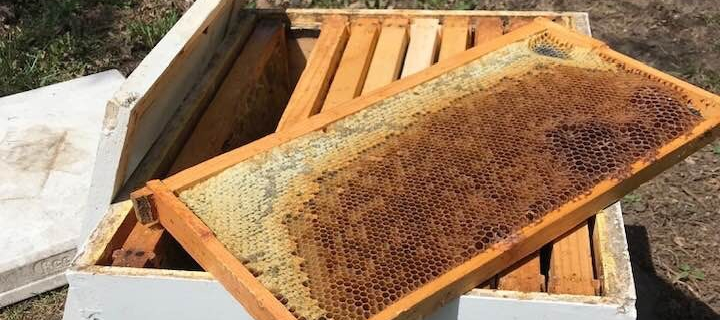
Today we’ll pull off those supers and will know for sure exactly what they’ve been doing. One hive had 6 supers, which is fantastic, that is, if they all have fully built comb filled with capped honey.

Another hive got a slow start – they just did not want to build comb. We will see if they learned that important task.

We harvest this time of year, just as the nectar flow begins to slow down and the bees – we hope – have capped all the honey. Bees will put a wax cap on a cell of honey when the honey reaches 18 percent moisture, which is the perfect state for optimum storage. Anything wetter than 18 percent will ferment.

Bees get honey to that perfect state by beating their wings, creating a steady air flow throughout the hive. Drops of water in the hive evaporate, also keeping the temperature cool.

I always look forward to harvest with mixed feelings: excitement to see what they have done (and what we’ll enjoy!) and a bit of hesitation that I will be around thousands of pissed-off stinging insects for several hours.

The process is fairly simple. You smoke the hive top and bottom. Then we use a sweet-smelling spray on a fume board that the bees do not like. After a few minutes of the board on the hive, many of the bees will have moved down and away to the main part of the hive.

Then we remove the supers (honey boxes) one at a time. I lift each frame (I use 9 frames per box) and sharply shake it so the bees fall off. I use a large brush to gently sweep away any remaining bees.

Then off it goes to the back of our pickup truck. Box by box, we harvest the honey. Then everything goes into the garage with the door shut, to rest overnight. The next day we start to extract the honey, which is the really fun part of beekeeping.

But right now, I am just waiting for the big reveal.

Tune in next time!
Hurray for the bees!

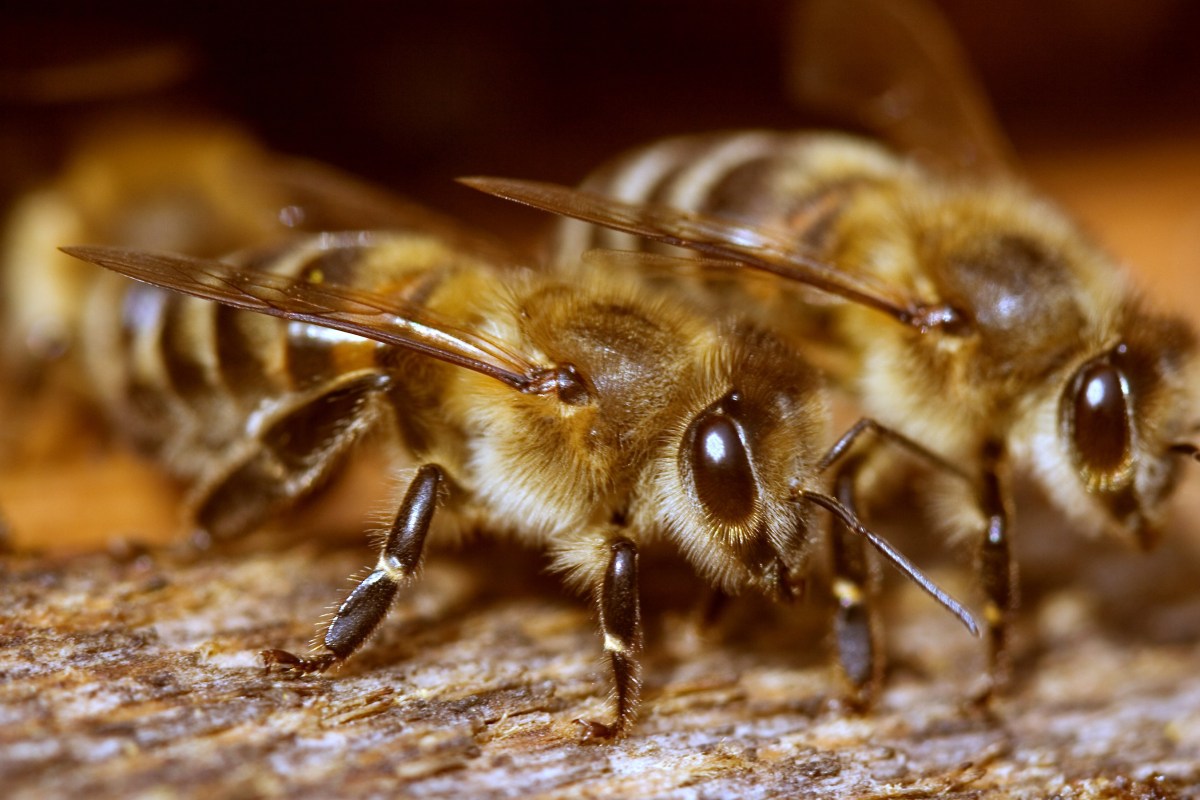
Today belongs to the bees! Saturday, August 17 is National Honey Bee Day.

The event was started in 2009 by U.S. beekeepers to promote and educate the public about the bee industry. The first proclamation was signed by an Iowan, Thomas Vilsack, who happened to be director of the U. S. Department of Agriculture.

And boy! We have a lot to celebrate!

The big thing with bees is not just the 163 million pounds of honey produced each year in the United States. Bees also pollinate a large variety of plants, including about 400 agricultural crops. One out of every three bites of food requires pollination. Economists estimate the value of honey bee pollination services at more than $15 billion in the United States alone.

Here are a few honey bee facts to share:

  • On average, bees fly 13-15 miles per hour and their wings beat 180 times per second.
  • Honey bees visit about 2 million flowers to make one pound of honey.
  • Bees do not sleep, instead they rest in empty cells in the beehive.
  • During honey-gathering season, there are about 40,000-60,000 bees in a hive.
  • To produce 2 pounds of honey, bees travel a distance equal to four times around the earth.

Impressive, right? Then go out and celebrate! Plant some flowers, enjoy honey on your toast, or kiss a beekeeper!

Here’s a cute video to help, featuring the bee waggle dance. If you like folks in white suits, you’ll love this.

You Tube video celebrating National Honey Bee Day

I hope it made you smile.

On a more serious note, here is a link to one of the most beautiful pieces about honey bees and the awesome part they play in our world.

Dance of the Honey Bee” was produced in 2013 by Bill Moyer. Enjoy!

How long will it last?

It has been a spectacular summer for both my garden and the bees.

After a cold spring that was achingly long to come, plentiful rain followed by warm temperatures helped my garden grow by leaps and bounds. The day lilies put up flower spikes that almost reached my armpits and I cannot recall purple coneflowers and rudbeckia ever growing so tall.

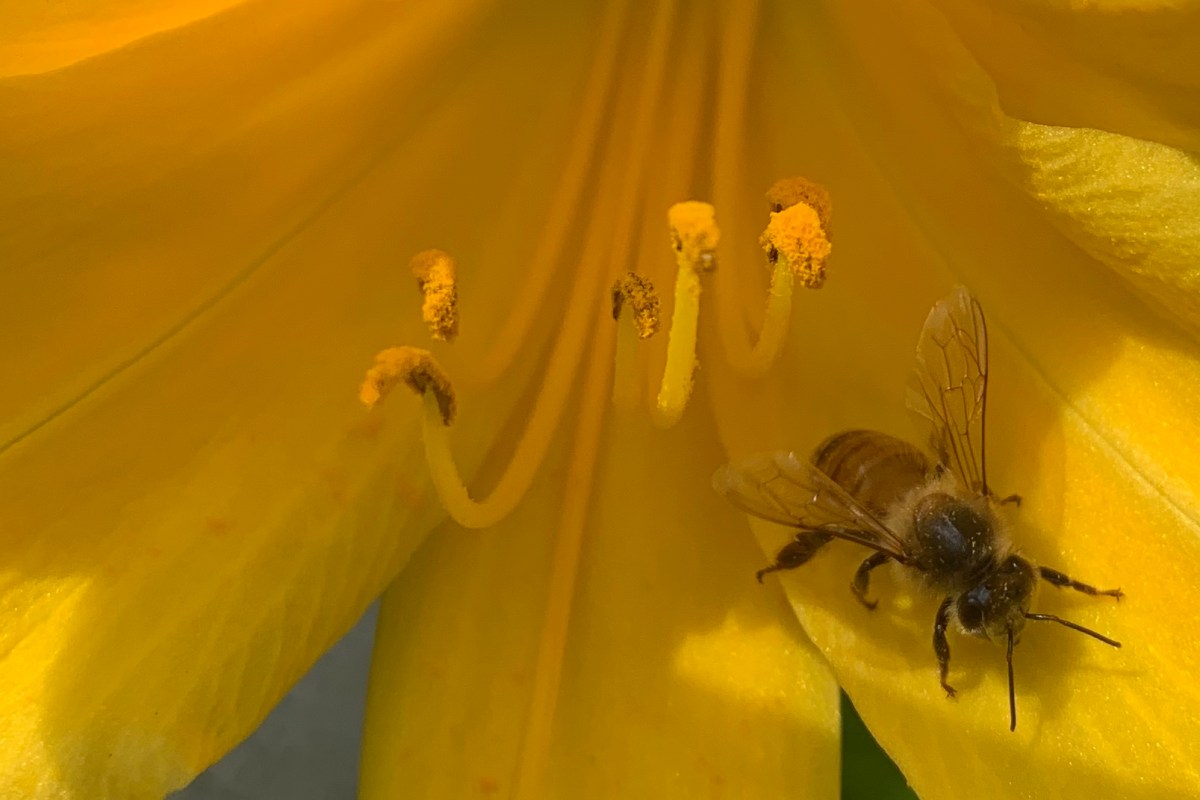
I am assuming these larger-than-normal flowers also are producing a healthy crop of pollen and nectar. That’s good for the bees.

The warm temperatures in July helped the bees fly faster and the nectar flow more freely, so I am quite hopeful for a bountiful honey harvest.

But now that it’s August, fewer plants will be flowering and my bees will notice the change before I do. Soon I will put on my robbing screens, which keeps bees from raiding weaker colonies. (More about that in another post!)

A couple years ago I lost two hives in August to robbing. I thought they were doing well, but alas, I lost the bees AND the honey they had put away for winter. It was such a disappointment (and fatal for the bees).

I am just thankful for the season we have had – and hope I can do the right things in the next several weeks to bring in a bumper crop of honey and to have healthy bees going into fall and winter.