Stranded

It looks like our captured swarm is adjusting well to their new home. Whew! We added a second brood box a week or so ago and today it was full of very busy bees. Just what we wanted to see.

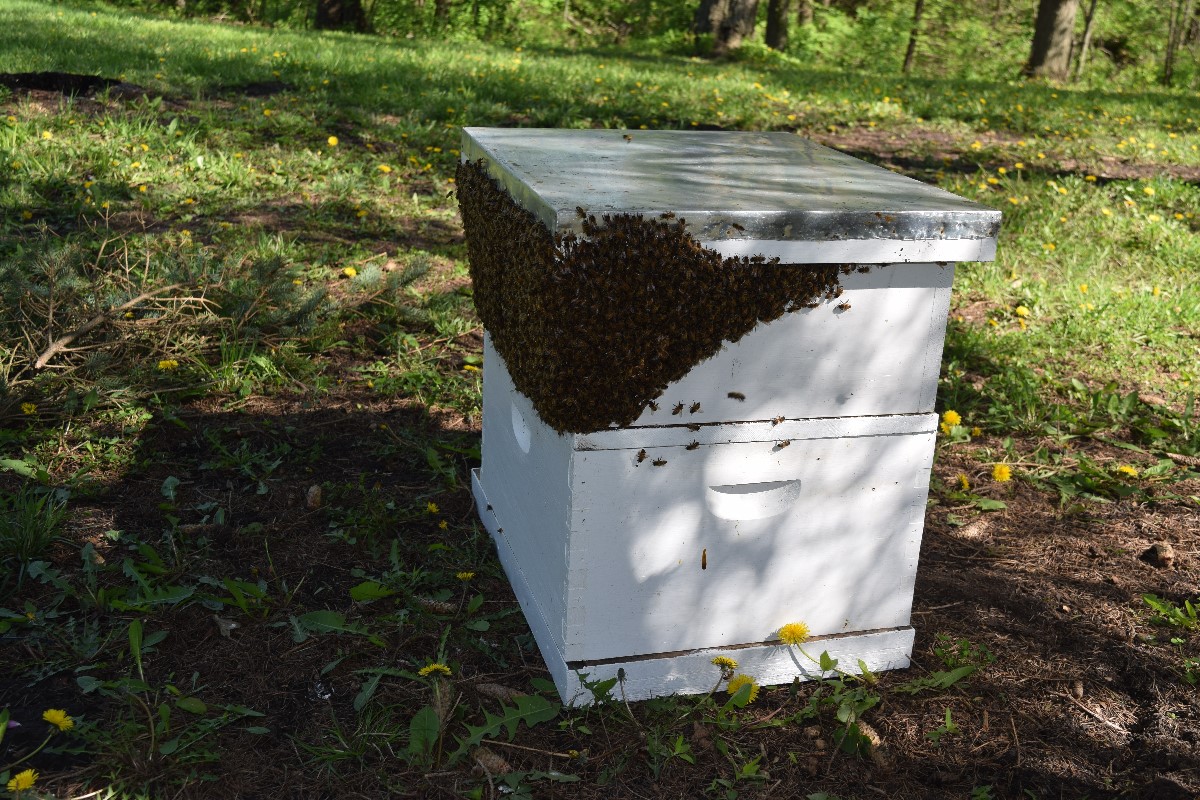
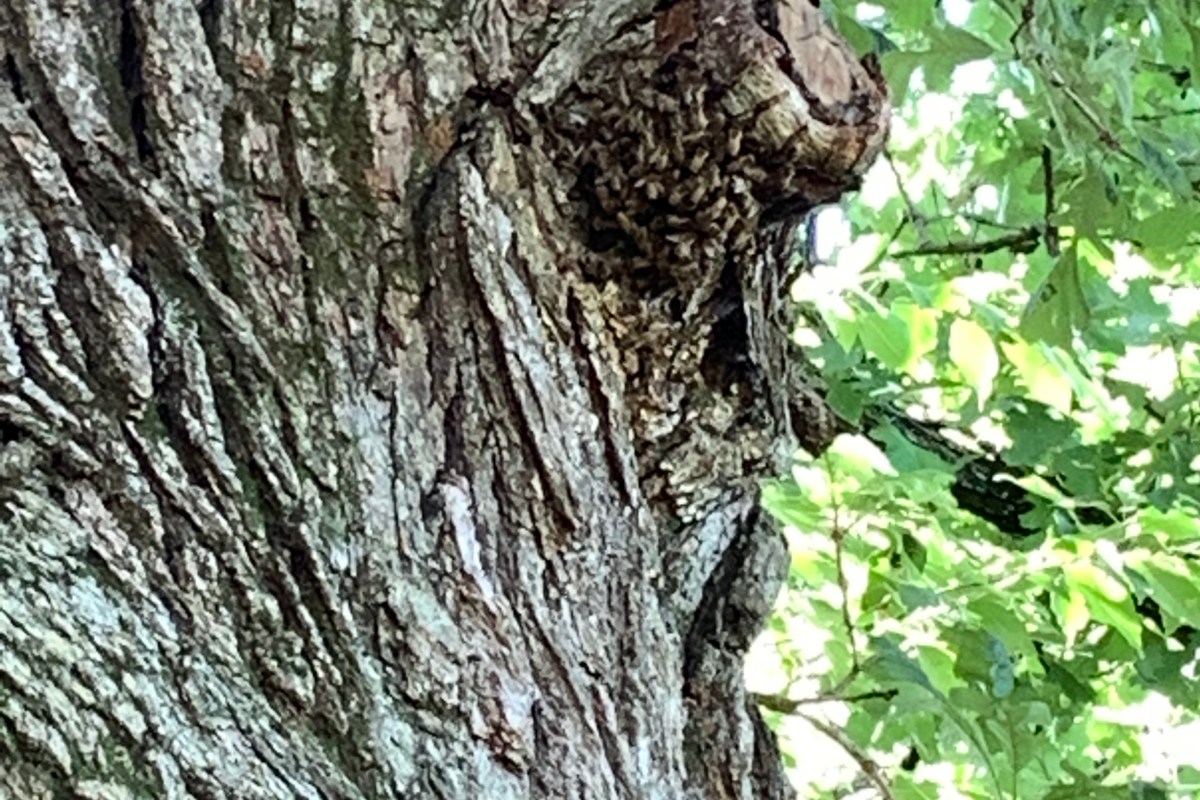
Some of their co-workers did not take to the move. They still are hanging out in the oak tree where we hung the swarm box. That will happen when you do not move a hive far enough away from the original hive (at least 2 miles is suggested). Foraging bees will go back to the same spot. Sometimes you can encourage the bees to make an orientation flight by placing a large branch in front of the hive entrance at the new location.

The first day quite a few bees were hanging out at the old location. Gradually that number has decreased as the stranded bees die or fly away.

The big question we still have is where the swarm came from. We live in a rural area and the most logical source of the swarm would be our other colonies. But those hives have remained strong all summer.

Another telltale sign is that queens in three of our four colonies are marked and we did not see a marked queen in the swarm.
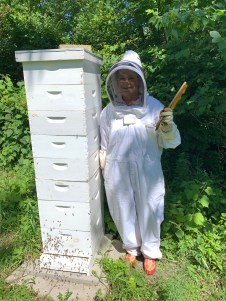
Our boomer hive – 5 honey supers!

Our fourth hive, which does not have a marked queen, has been making honey like crazy. They are working on their fifth super!

So the mysteries remain. We don’t mind so much, as long as the bees are happy.
Success! Maybe?

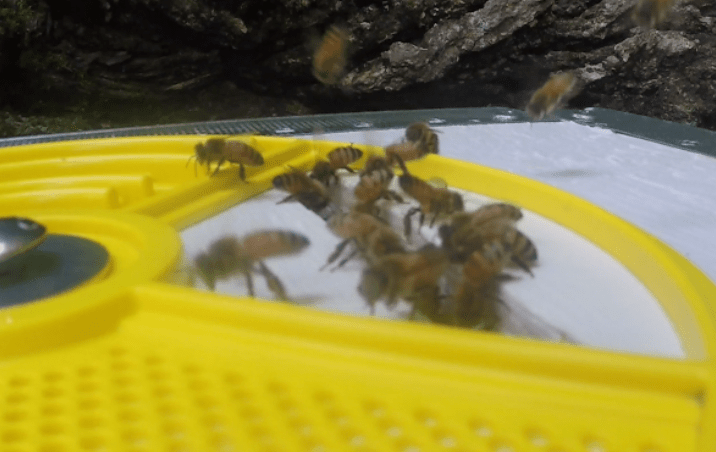
We are seeing bees at our swarm box!! Our hope is that it is a swarm and not just a handful of visiting scout bees.

The number of bees has been a lot, and it has been consistent for more than a week. Today was the day we decided to take down the swarm box and check inside to see what we’ve caught.

Success! The box was heavy and literally filled with bees! They had built all sorts of beautiful, white, new comb, including a LOT of bur comb (sort of a free-form comb not within the frame).

Even better, the queen had filled many cells with eggs, some of which already were capped. It was just what you want to see.

Husband Dave had thought out the entire process of getting a heavy box safely down from a tree. He built a rope sling to steady the box while he unhooked the strap and removed the box from its wire hanger. He then lowered the swarm box with a rope to the ground, where I was waiting anxiously.

This may appear to be a textbook swarm capture but one big question remains: will the bees stay in their new home?

We waited long enough for the queen to lay eggs. Nurse bees will not leave their little ones, so that point has been addressed.

Another potential problem is where we placed the new hive. It is suggested that the new home be at least six miles away to ensure that the foraging field bees do not return to the swarm box location.

We put the new hive in our bee yard just a few hundred yards away from the swarm box. For about an hour lots of bees returned to the oak tree. They have disappeared now and things seem to be calming down.

So we’ll see what happens. As I said in my earlier blog about this process, if only I could put up a sign: ATTENTION BEES – Your new house is right around the corner.

We will see! More to come.

Link to website where Dr. Leo Sharashkin explains how to build a swarm box

Heat? What heat?

We braved the heat and humidity last weekend to visit the Des Moines Art Festival. Partway through our stroll through downtown Des Moines I found myself in need of a “facility” and only the portable kind was available. Three minutes in that tiny, stuffy and dimly lit Kybo and I was ready for some fresh air! Believe it or not, what had been intolerable outside actually felt refreshing!

That’s what I imagine it’s like inside a bee hive. While we suffer through this miserable heat wave, literally thousands of bees are working their butts off in a dark, stuffy hive.

When it gets really hot and sticky, the bees like to hang out outside the hive (see above). I can see why! This is called bearding.

The bees take turns working in the hive. Many are focused on one of their most important jobs for the colony: making and storing honey for fall and winter survival.

Honey stores best at 18 percent humidity – any more and it will ferment, and less it will solidify.

Most uncapped honey is “wet” – too watery, so bees beat their wings to increase air circulation within the hive. This will encourage evaporation of the extra moisture in the uncapped honey. When the honey reaches that magic state of 18 percent humidity, other bees excrete wax and cap each cell of honey. At this point, honey will keep indefinitely.

All this takes place when outside air temps exceed 95 and humidity also may be just as high!

I used to feel sorry for the bees during hot weather. Then I learned from a commercial beekeeper that the bees love the hot weather. It’s easier to fly, and the nectar is easier to get. In Iowa, hot weather also seems to be when the nectar is plentiful.

So let’s hear it for the bees. They have their work cut out for them! It’s hot and they love it! Hip hip hurray!