My bees always, always surprise me. And this week they gave me one of the biggest surprises yet. It was a little embarrassing but I’ll share it anyway.
As you may recall, I have been tending to three new hives, each with a new queen bee. They came from California (I apologize for this cool Iowa spring), and I have been hoping that these new gals have been adjusting well to their new home.
So on Friday I checked all the hives. My long-time mentor John Johnson always told me that the main purpose of a hive check is to make sure they are “queen-right,” that is, they have a working queen. Since the queen’s only job in the hive is to lay eggs, you look for eggs or baby bee larva.
The fIrst new hive looked good. I found lots of bees crawling over cells filled with larvae. A strong queen will fill nearly every cell on a frame. A weaker queen will leave gaps, which isn’t as good, but one only hopes she’ll get better at her job.
The second hive looked good, too. Lots of larva waiting to be fed by the nurse bees.
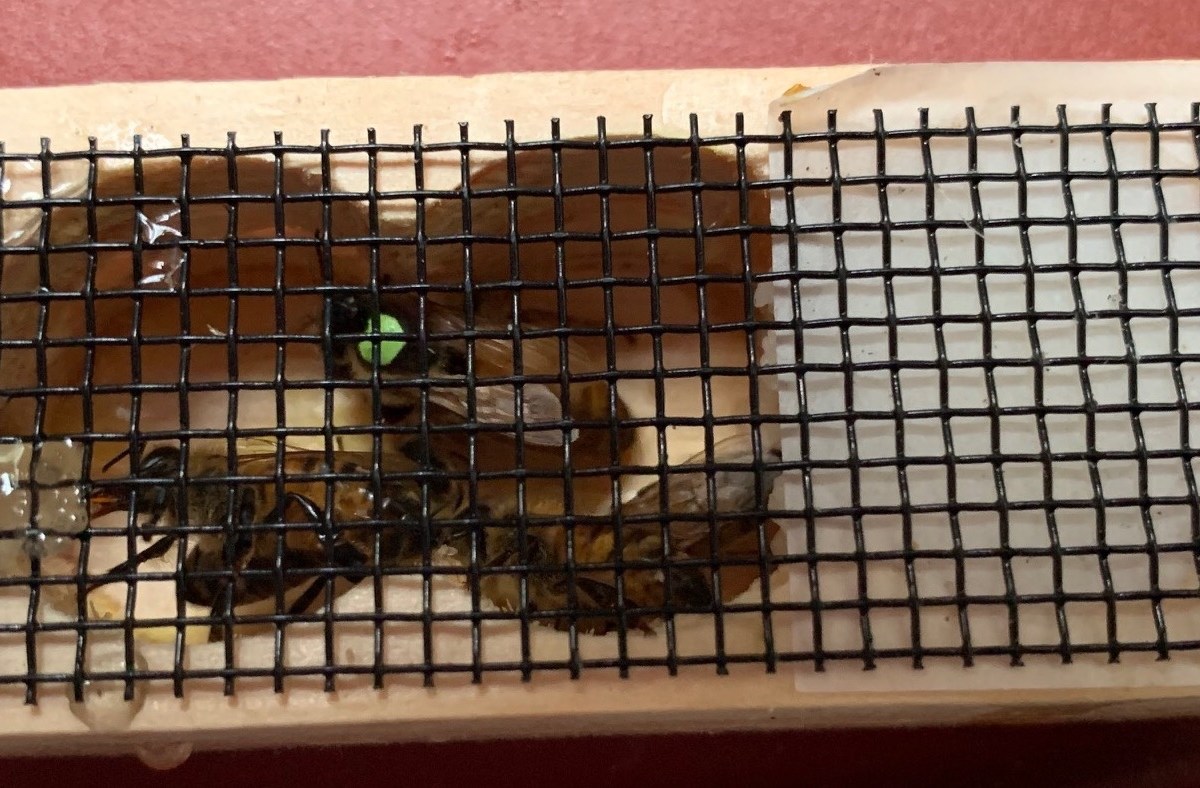
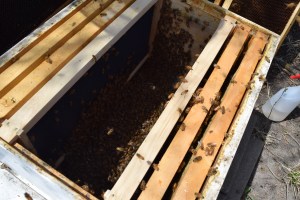
But the third hive was different. No new comb, no cleaning up old comb. Lots of bees, but they didn’t seem to be doing much of anything. Then I spotted the queen (luckily, she was marked with a bright green dot on her thorax). She was crawling around on an empty frame.
Not good a good sign.
I called my bee supplier, Connie, from Perry. “I think my queen is bad,” I told her. “There aren’t any eggs or larva in the hive. I don’t think she’s Doug her job.”
Sometimes queens do not perform adequately. Virgin queens are fertile for only a few days after they emerge from their cell. They mate only during their lifetime, and poor flying weather and lack of mates can greatly impact their laying capacity for the rest of their lives. That may have been the case with my queen.
Connie quickly offered to replace the queen. I only needed to pick her up. So the next day off I went to Connie’s shop.
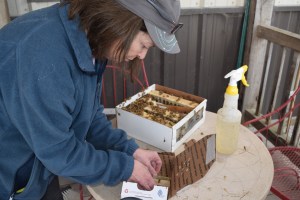
Soon I was back in the hive. I had plenty of mixed emotions about finding – and killing – the “bad” queen before slipping in her replacement.
Out came a frame and I couldn’t believe what I saw: cells full of tiny, white bee larva!
I looked again. Sure enough! The queen was alive and well! The hive was queen-right!
How could I have missed that, I wondered. Red-faced, I called Connie. “Uh, I have bad news. There was a lot of larva in my hive, so I am not replacing my queen,” I told Connie.
“But that’s good news!” she replied.
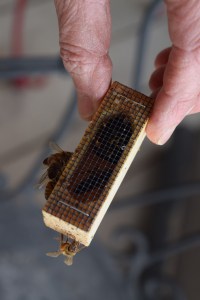
It turns out that Connie can pick up the queen in a few days when she’s in the area. The new queen I have is in a tiny cage, along with f our “attendant” bees. They will make sure she is fed, watered and generally pampered.
All I need to provide for my new house guest is a drop of water and a drop of honey three times a day. Let’s hope the queen enjoys her stay and can bring life to another hive.
 Bee Lady Honey