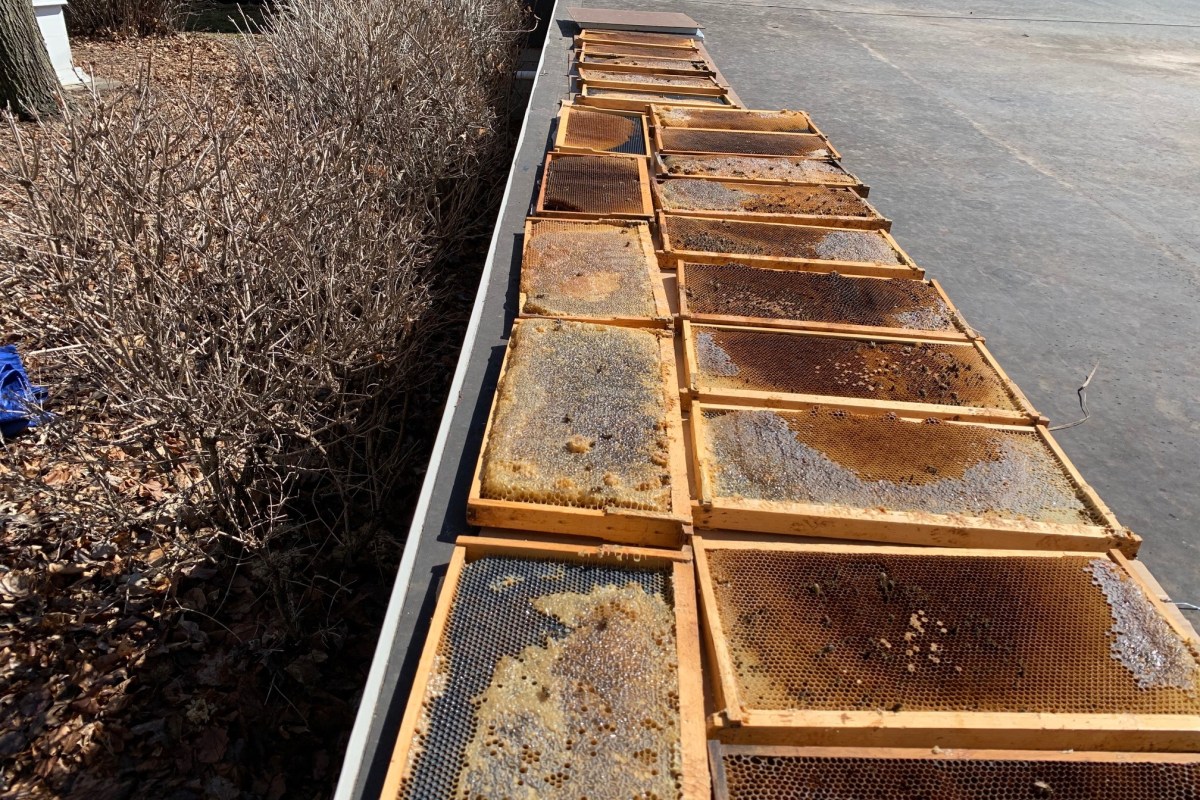
Nature’s technology – the sun – turns out to be the best answer to getting rid of a nasty disease that killed at least one of our beehives this winter. Yeah for the sun!
What you see above are all 20 frames from one honey bee colony. They are laid out on our flat roof to soak up ultraviolet rays from the sun. These rays kill fungal spores of Nosema disease, one of two microscopic parasites that affect the gut of honey bees.
After writing last week about the death of three hives (and receiving tons of condolences – thank you!), I posted a couple photos on a local beekeeping website. One photo showed the tell-tale signs of dysentery (diarrhea) — reddish-brown spots inside the hive on top of the frames.
Lo and behold, within a few hours other helpful beekeepers advised me to get a sample of the dead bees tested for Nosema. The only way to diagnose this disease with certainty is to examine intestines of infected bees under a microscope. So off I went with my dead-bee sample in a cottage cheese container to find Andy Joseph, our state apiarist who has an office in Ankeny.
Two days later came the bad news in an email from Joseph.
According to his tests, my bees averaged 29.3 million spores per bee. The threshold for treatment is about a million spores per bee, so my bees were quite sick before they died. Wow! Now I really feel bad about the care of these bees!
Joseph explained that beekeepers have few options for treatment. A chemical that had been used to disinfect hives with Nosema has disappeared from the market. Ultraviolet light from the sun, however, kill the spores so I was glad to hear about a low-tech fix. And even better – sunlight is free!
Here’s what else I learned about Nosema:
Adult worker bees get infected with the spores at a young age, which lodge in their intestines. The fungus causes the bee to have trouble digesting food for the rest of its life. Infected bees do not produce food for the brood. In fact, they often skip the stage where they are nursemaids for young bee larvae (worker bees perform all the jobs in a hive in a certain order that’s related to their development). Worse yet, these bees take on the most difficult job in the hive before they’re ready: foraging.
Hmm, fewer nurse bees in the hive. Not good.
And young, inexperienced bees who aren’t feeling well hunting for nectar, pollen and water. Double not good.
When the queen bee is infected with the spores, she also has a shorter lifespan and quits laying eggs. That can spell the death of a hive.
My hives could have had symptoms of Nosema for a couple years, but not enough to cause the death of the colony. But when it’s cooler, and bees are not able to take a cleansing flight, the spores can build up and spread rapidly. That’s probably what happened this year.
I also learned that the best defense against Nosema is to maintain strong hives with healthy bees able to withstand stress, such as Nosema. I also need to recognize early signs and be on the lookout – without the surprise of a dead colony.
Beekeeping is an adventure; I never know what I’ll see when I open the hives. No matter how long I keep bees, I’ll always be a student, never a master!
 Bee Lady Honey