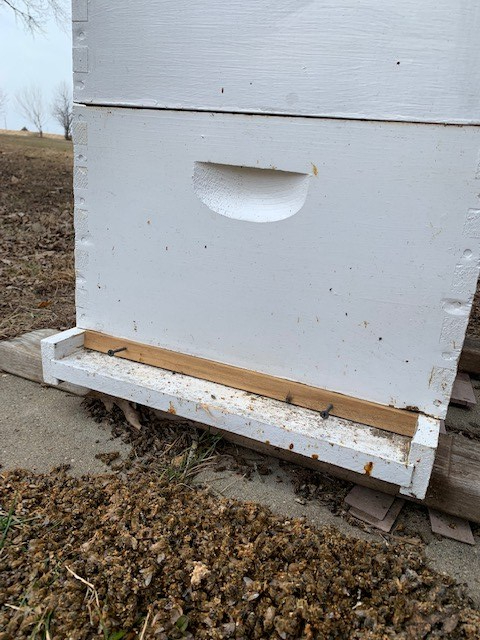
Spring always brings fresh, new things: baby animals, budding flowers and leaves on trees. So my hopes for a boisterous start to the honeybee season were dashed when I finally got into my hives last Wednesday afternoon.
Three of our four hives are dead. Two had just a few dead bees around the edges. On the third we cleaned out quite a population of dead bees. A few presumed hardy bees occupied the fourth hive, for which I still hold out hope for a good season.
I’ll never forget the sadness I felt the first time I lost a colony of bees. It was my third year and I was devastated. I felt that I had let these gals down, not providing proper care for them. It turns out the deadouts that year were from too much moisture inside the hive. I had missed a couple bee classes the year before and did not know about adding an insulation board under the top cover to help control moisture on warm-then-cold days. Bees do a good job of keeping themselves warm during cold temperatures, but cold and wet are a perilous combination for them.
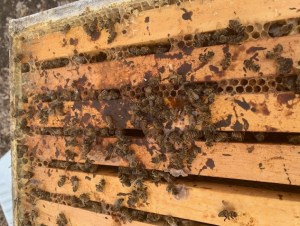
Lots of bees and some dysentry on frames
We saw activity in front of all four hives this winter, even into February. But then the Polar Vortex hit and I suspect the extreme cold temperatures and wind probably took its toll.
Iowa’s apiarist Andy Joseph said he’s been seeing a lot of hive loss this season. He advises beekeepers try to figure out the cause to keep history from repeating itself.
Hives most often are lost due to poor health of the bees going into winter. That’s why most beekeepers feed their bees sugar water in the fall so they have plenty of food stores going into winter and the bees themselves can put on a few micro-ounces.
We also treat for Varroa mites. These tiny but deadly pests can infect all hives, getting into brood cells and killing new larvae. Most beekeepers treat for mites in spring and fall, but Joseph said mites last fall were exceptionally hard to kill. Several chemical formulations are available. I use a treatment in the form of plastic strips placed between frames for several weeks. The chemical kills mites but not the bees. Mites also carry viruses and disease, which are passed along to bees inside the hive.
Another cause could be lack of food, but the honey stores in all my hives were almost all in tact. I had also placed a protein patty supplement on top of the frames late last fall, and in two hives it was hardly touched. If temperatures are too cold, and the winter bees cannot break their cluster to get honey, they can starve even with food only a frame or two away.
Long periods of cold weather also keep bees inside the hive, unable to take “cleansing” flights. The bees will not poop in the hive and can develop dysentery, which can be a sign of other diseases.
That’s a lot for a beekeeper to think about! I need to do a little detective work in these empty hives, clean up the frames and get them ready for another batch of bees.
People ask me what’s next. I will probably order three packages of bees and three fertilized queens. Many commercial beekeepers are just now getting their bees back from warmer climates where the bees have been providing pollination services for orchards and large-scale growers. Their hives are bursting with bees, and some will make it to my house in either a two-pound box or a three-pound box.
We all know that winter hive losses are part of beekeeping, but that doesn’t make it any easier. We all keep our fingers crossed!



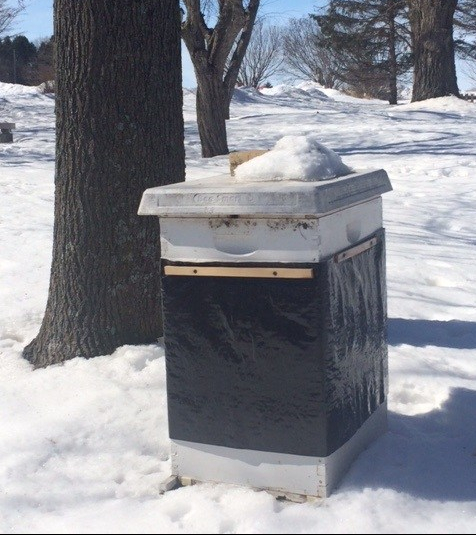
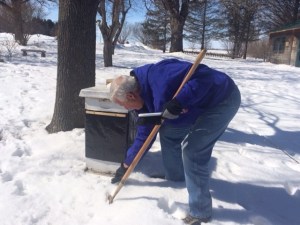 On that first warm day I will peek under the lid to see how the bees are faring. I hope they’ve fou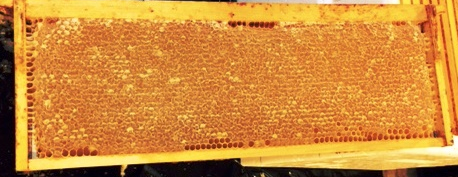
 Bee Lady Honey