
Here’s something that cereal-maker giant General Mills wants you to contemplate over your morning bowl of Cheerios: Where did all the bees go and how can you help?
The Minnesota company has taken its mascot, Buzz the Bee, off all its cereal boxes in a nationwide campaign to encourage customers to plant more than a million wildflowers this year. The campaign is fashioned after a similar effort in Canada last year to increase awareness about the dwindling population of pollinators and their importance in the food system. The company claims that thirty percent of its ingredients are pollinated by bees. When customers sign up for the program, they get a free package of wildflower seeds to plant.
According to a company website about the program, General Mills plans by 2020 to host more then 3,300 acres of nectar- and pollen-rich wildflowers on farms that grow oats for their products.
“People need bees and now bees need people,” the website states, citing these well-reported facts:
- 1 in 3 bites of food we eat is made possible by bees and other pollinators
- 42% of bee colonies in the U.S. collapsed in 2015
- 70 out of the top 100 human food crops are pollinated by bees
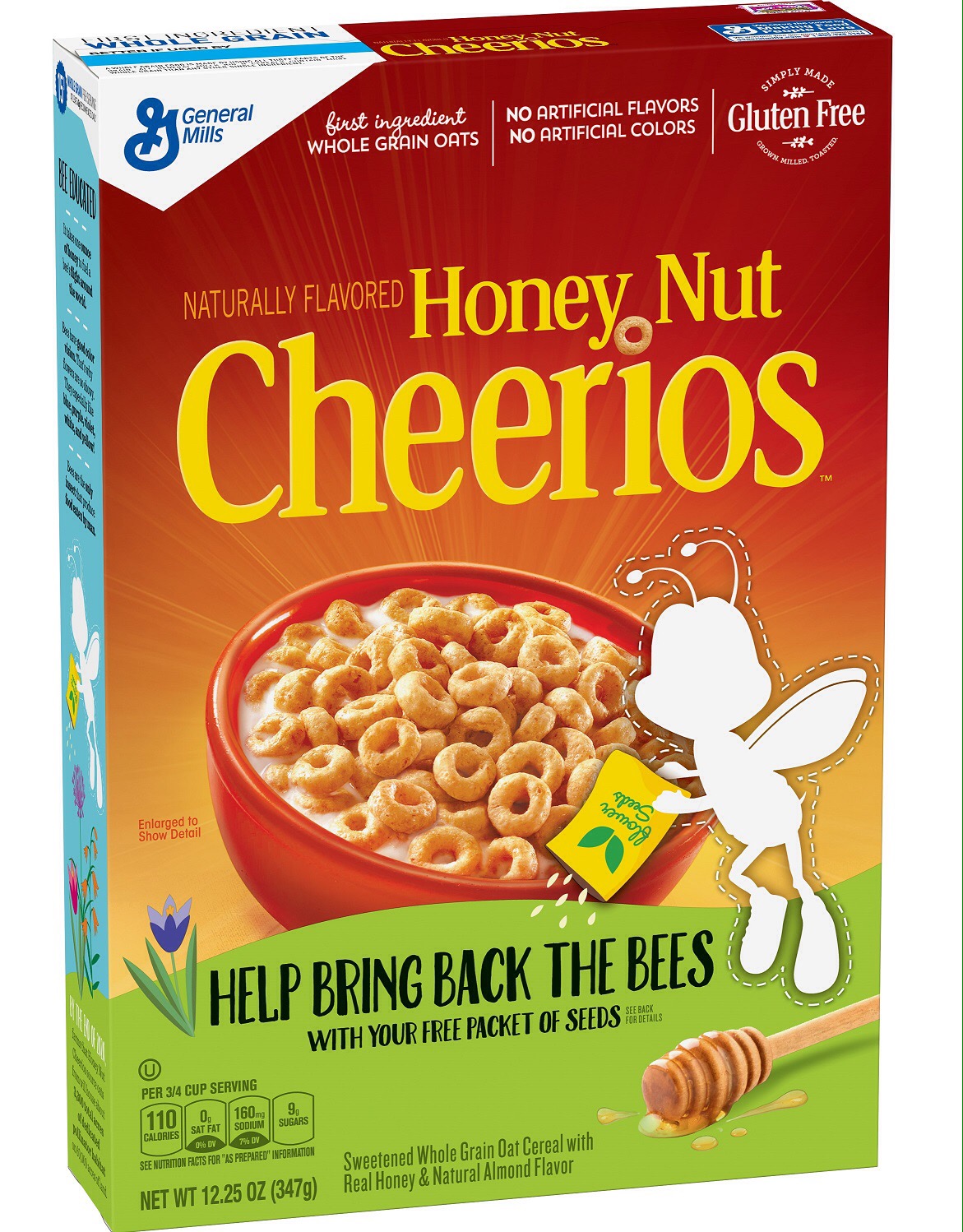 I ordered my wildflower seeds and I am sure that three years from now my bees will love having another source of food. Habitat loss for bees and native pollinators has been huge in Iowa, as well as a host of other factors – disease and pesticides being the two biggest – that are working against our bees.
I like to see large corporations get into the act of tipping the balance in the favor of bees and pollinators. Sometimes such efforts are half-hearted and more of a diversionary tactic to distract us from real solutions to these complex problems.
This appears to be sincere, and I applaud General Mills for its commitment to pollinator awareness and protection. The more people who are aware of these issues and can work toward solutions, the better off we’ll be.
Besides, I really like seeing Buzz the Bee. He’ll be welcome on cereal boxes at my breakfast table, as soon as all the wildflowers get planted.
 Bee Lady Honey